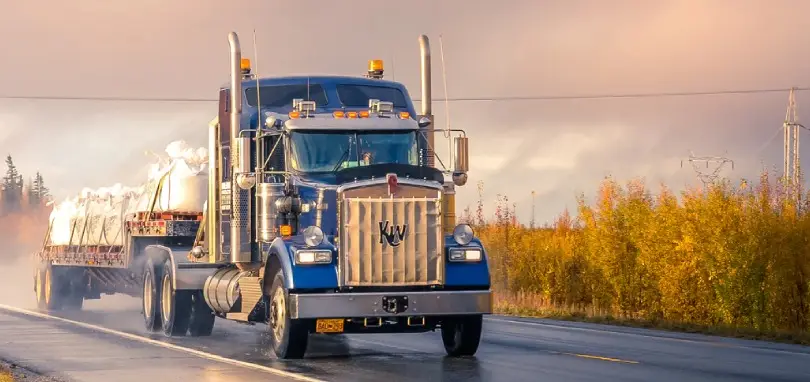
Las Vegas sits on one of the busiest freight corridors in the West. I-15 carries a constant stream of commercial trucks between Southern California and Utah, US 95 and the 215 Beltway feed them through the valley, and all of that traffic merges with commuters and tourists at interchanges like the Spaghetti Bowl. When something goes wrong at 65 miles per hour, the mismatch is brutal: a fully loaded semi can legally weigh up to 80,000 pounds (FHWA: https://ops.fhwa.dot.gov/freight/sw/overview/index.htm), many times the weight of the passenger car next to it. The physics decide who gets hurt.
Here are the most common causes of truck crashes in the Las Vegas valley, and why the injuries they leave behind are so often life-changing.
Driver Fatigue
Fatigue is built into the economics of trucking: drivers are paid to cover miles, and Las Vegas is a long haul from almost everywhere. Federal hours-of-service rules exist precisely because of this. A property-carrying driver is limited to 11 hours of driving inside a 14-hour work window, and must first have 10 consecutive hours off duty (FMCSA: https://www.fmcsa.dot.gov/regulations/hours-of-service). When drivers or their employers push past those limits, reaction time and judgment degrade the same way they do with alcohol. Those logbooks and electronic logging device records become key evidence after a crash.
Speeding and Following Too Closely
A loaded semi needs far more distance to stop than the cars around it. On the downhill grades coming into the valley and in the stop-and-go traffic near the Spaghetti Bowl, a trucker who is speeding or tailgating has surrendered the margin for error. Rear-end truck crashes at highway speed are among the deadliest collisions on Nevada roads.
Blind Spot Errors
Large trucks have deep blind spots on all four sides, which the FMCSA calls the No-Zones. A truck that changes lanes into a car it cannot see, or turns across a vehicle sitting in its right-side blind spot, creates a crash the car’s driver had almost no way to avoid. Blind spot collisions are a fixture of the 215 Beltway’s heavy merge points.
Unsecured or Shifting Cargo
Cargo that is loaded badly or secured carelessly can shift in transit, destabilize the trailer, or spill onto the roadway at speed. Federal rules make securement the carrier’s responsibility, and we covered how those obligations work in our post on commercial truckers’ duty to secure their cargo. A load that comes loose on I-15 becomes an instant multi-vehicle hazard.
Distraction and Impairment
Truckers make the same mistakes as everyone else: phones, food, fatigue-masking stimulants, and in some cases alcohol or drugs. The difference is the consequence. A distracted driver in a sedan drifts a few feet; a distracted driver pulling a 53-foot trailer sweeps across an entire lane of traffic.
Poor Maintenance
Brakes, tires, lights, and coupling systems take enormous wear on long freight routes, and federal rules require carriers to inspect and maintain them. Worn brakes on a downhill grade or a blown tire at highway speed can turn an otherwise routine trip into a catastrophe. Maintenance and inspection records are another piece of evidence that rarely survives long unless someone demands them early.
Why Truck Accident Injuries Are So Often Catastrophic
The same crash that leaves two sedans with bent fenders can leave a car crushed under a trailer. That is why truck collisions produce a disproportionate share of catastrophic injuries: traumatic brain injuries, spinal cord damage and paralysis, amputations, severe burns, and injuries that end careers and require lifetime care. The medical costs, lost earning capacity, and daily-life consequences of these injuries dwarf a typical car accident claim, and the insurance policies involved are larger to match. That is also why trucking insurers fight these cases harder.
Who Can Be Held Responsible
Truck cases are rarely just driver-versus-driver. Depending on the cause, responsibility can reach the trucking company that set the schedule, the broker or shipper, the crew that loaded the cargo, or the contractor that maintained the equipment. Each of those parties carries insurance, and each will point at the others. Identifying every responsible party early, and preserving the logs, ELD data, and inspection records that prove the cause, is most of the battle. A Las Vegas truck accident lawyer who knows how insurers evaluate these claims can force that preservation before the evidence disappears.
What to Do After a Truck Crash in Las Vegas
- Call 911 and get a police report; commercial crashes often trigger additional reporting
- Photograph the vehicles, the roadway, skid marks, and any spilled cargo
- Get medical care immediately, even if you feel able to walk away
- Do not give the trucking company’s insurer a recorded statement
- Talk to a lawyer quickly, because carriers dispatch their own investigators to the scene within hours
Fault also matters more in Nevada than many drivers realize. Nevada is an at-fault state, and your share of the blame can reduce what you recover, which we explain in how fault works after a Las Vegas car accident.
Common Questions
The injuries are usually worse, the insurance policies are larger, more parties share responsibility, and critical evidence (driver logs, ELD data, maintenance records) is in the trucking company’s hands. Federal regulations also create standards of care that do not exist in ordinary car crashes.
As soon as you are medically able. Trucking companies and their insurers begin building their defense the day of the crash, and some records are only kept for a limited time unless a preservation demand is made.
That is the normal situation on I-15. Interstate carriers are subject to federal regulations and can be pursued in Nevada for a crash that happened here. It changes the logistics of the case, not your right to compensation.
Talk With a Las Vegas Truck Accident Lawyer
If a commercial truck crash injured you or took a family member, Ralph A. Schwartz, PC brings something most firms cannot: Ralph spent years as an insurance defense attorney, so he knows exactly how trucking insurers evaluate and minimize these claims. Clients work directly with him from the first call. Call 702-888-5291 or request a free case review. Truck accident cases are accepted on a contingency fee basis.
This article is general information about Nevada law, not legal advice for your specific situation.